
- Discussion
- Society, Politics, & Culture
Benedict Anderson und Jose Rizal
Featuring Patricio N. Abinales & Ambeth Ocampo
Philippine Pavilion Event
Anderson, a world renowned political scientist whose book Imagined Communities is one of the most cited in the world in many areas of social science and cultural studies, was deeply fascinated with Jose Rizal and his novels. Two historians will share not just how Anderson used Rizal’s works to interrogate the complexities of nationalism and resistance in Southeast Asia, but also anecdotes of Anderson’s excursions into Filipino culture.
Forum 1 Philippine Pavilion – Proscenium, Messe Frankfurt, Frankfurt am Main
Meet the Speakers:
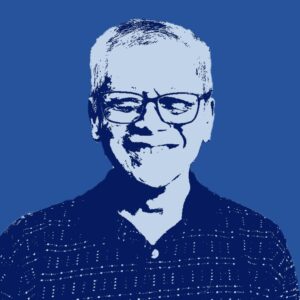
Patricio N. Abinales
Patricio N. Abinales retired as a Professor from the Department of Asian Studies, University of Hawai’i-Manoa in 2025 and completed a six-month research fellowship at the Center for Southeast Asian Studies, Kyoto University, last August, where he was working on a manuscript on everyday authoritarianism in the University of the Philippines during the Marcos era.
Abinales grew up in the northern Mindanao city of Ozamiz and studied at the University of the Philippines and Cornell University.
His first book was a co-authored one. Transnational Corporations in the Philippine Banana Export Industry was a study of corporate agriculture in southern Mindanao conducted by the University of the Philippines Third World Studies Center (TWS).
In 1998, Abinales published his first single-authored book, Images of State Power: Essays on Philippine Politics, from the Margins with the University of the Philippines Press. This was followed by Making Mindanao: Cotabato and Davao in the Formation of the Philippine State, 1900-1972, published by Ateneo de Manila University Press in 2000 (and republished in 2020). In 2001, the University of the Philippines Press published his Fellow Traveler: Essays on Filipino Communism, which won the National Book Award for the Social Sciences.
In 2005, he and his late wife, Donna J. Amoroso, co-authored State and Society in the Philippines, published by Rowman and Littlefield (an expanded edition was released in 2017). In 2010, he wrote Orthodoxy and History in the Muslim Mindanao Narrative, which was published by Ateneo de Manila University Press.
His last four books are The Contemporary World, a 2021 college textbook he co-wrote with Professor Lisandro Claudio of the University of California-Berkeley and put out by C&E Publishing Inc., of Manila; Modern Philippines, which was published in 2022 by ABC-Clio Greenwood Press; The Marcos Era Reader, which he co-edited with Leah Castañeda-Anastacio, published in 2022 by Ateneo de Manila University Press; and Presidents and Pests, Cosmopolitans and Communists, which came out of Ateneo de Manila University Press in 2023.
Abinales wrote two non-academic books with Anvil Publishing: Love, Sex and the Filipino Communist, or Hinggil sa Pagpigil ng Panggigigil, in 2004, and Joys of Dislocation: Essays on Mindanao, Region, Nation, in 2008. Pasig City: Anvil Publishing. He is currently working on a third book, Global Cuisines: The Philippines, for ABC-Clio Greenwood Press.
He lives in Quezon City with his wife, the book historian Patricia May Jurilla, and their two dogs, Caxton and Pinpin, and commutes to Honolulu to visit his daughter Angela.
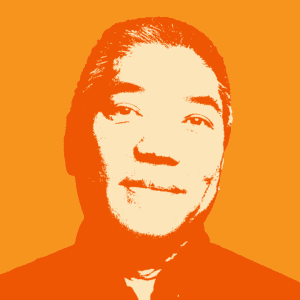
Ambeth R. Ocampo
Ambeth R. Ocampo, Senator Gil J. Puyat Professor at Ateneo de Manila University, and Distinguished Professorial Lecturer at De La Salle University, is a Public Historian and Independent Curator whose research covers the 19th Century Philippines: its art, culture, and the people who figure in the birth of the Filipino nation. He writes Looking Back, the longest-running editorial page column on history for the Philippines Daily Inquirer. Among his 35 books, Rizal Without the Overcoat has been in print for the past 35 years. Professor Ocampo previously served as President, City College of Manila; President, Philippine Historical Association; Co-Chair, Manila Historical and Heritage Commission; Chairman, National Historical Commission of the Philippines and concurrently Chairman, National Commission for Culture and the Arts. He has held academic appointments at University of the Philippines (Diliman and Baguio), De La Salle University, Chulalongkorn University, Kyoto University, Sophia University, and the University of Michigan at Ann Arbor. His work in public history has been recognized through various honors and awards: the Fukuoka Academic Prize, Ten Outstanding Young Men, Metrobank Outstanding Teacher Award, and a Fulbright Senior Research Fellowship. He was conferred the Spanish Order of Civil Merit, the French Order of Arts and Letters, and from the Philippines as Knight Grand Officer (Knights of Rizal), the Order of Lakandula (Rank of Bayani),and the Presidential Medal of Merit. In another life, he was a Benedictine monk known as Dom. Ignacio Maria, OSB. Today, he publishes history on his growing Facebook, Instagram, and YouTube channels.